
A prescription can be profitable on paper and still leave a pharmacy short on cash. The practical answer to how to improve pharmacy cash flow is to speed up collections, keep a close eye on expenses, account for reimbursement adjustments, and build revenue from OTC products and cash-based services.
Independent pharmacy owners know the pressure: payroll, inventory, and other bills come due on schedule, while insurance payments and claim corrections can make cash timing less predictable. A stronger routine starts by tracking when money is due in and out, then addressing the delays and costs that tie up available cash.
This article covers practical ways to monitor cash flow, follow up on claims and patient balances, review expenses, and plan for PBM adjustments. It also looks at ways to build cash-based revenue, including OTC sales and services that suit your pharmacy and community. The aim is to identify where cash gets tied up and how to keep operations moving.
Key Takeaways
- Map incoming payments against bills and inventory purchases to spot where cash gets tied up.
- Review unpaid claims regularly, correct submission errors, and look for denial patterns that may need follow-up.
- Use payroll and expense reports to find costs that can be better aligned with pharmacy activity.
- Track PBM reimbursement timing and adjustments to make purchasing and cash-flow planning more predictable.
- Explore OTC sales and cash-based services that fit your pharmacy and the needs of your community.
1. What Is Cash Flow?
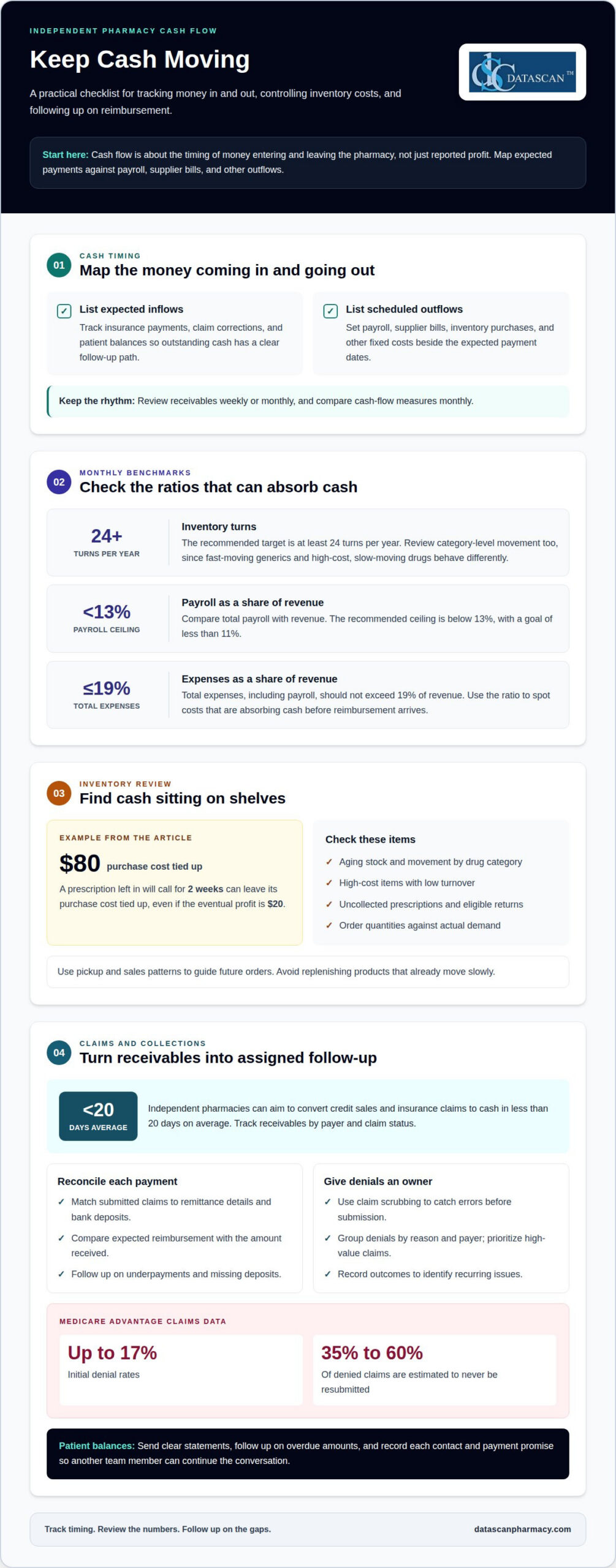
Cash flow is the timing of money entering and leaving a pharmacy, not simply its reported profit. A prescription can earn a margin while cash remains tied up in inventory or awaits reimbursement. If you’re looking for ways to improve pharmacy cash flow, start by mapping weekly inflows against payroll, supplier bills, and other fixed outflows.
Track cash-flow measures monthly, including inventory turns, payroll as a share of revenue, and total expenses as a share of revenue. Inventory turns show how often stock is sold and replaced. The recommended target is at least 24 turns per year, though category-level rates matter too. Fast-moving generics and high-cost, slow-moving drugs can behave very differently.
For payroll, compare total payroll with revenue; the recommended ceiling is below 13%, with a goal of less than 11%. Total expenses, including payroll, should not exceed 19% of revenue. These ratios help identify whether labor or other operating costs are absorbing cash before reimbursement arrives. Understanding how to improve pharmacy cash flow also means reviewing these measures alongside sales and purchasing patterns.
Prescription drug inventory is often a pharmacy’s largest asset, so inventory management directly affects available cash. A prescription sitting in will call for 2 weeks can leave its $80 purchase cost tied up, even if the eventual profit is $20. Review aging stock, movement by drug category, and high-cost items with low turnover. Adjust order quantities to actual demand, and avoid replenishing products that already move slowly.
Uncollected prescriptions and excess stock can also squeeze cash: money tied up in products may sit on shelves for weeks. Return eligible prescriptions customers do not pick up, and use pickup and sales patterns to guide future orders. Repeated unclaimed fills in one category, for example, may be a reason to adjust purchasing or coordinate refill timing.
For a separate tax-related test, the Internal Revenue Service says a corporation or partnership meets it if average annual gross receipts for the 3 prior tax years were $26 million or less (indexed for inflation). This is a tax threshold, not an inventory-turn target; keep those measures distinct in financial reviews.
The Internal Revenue Service states: “(D) The amount paid for the property does not exceed $500 per invoice (or per item as substantiated by the invoice) or other amount as identified in published guidance in the Federal Register or in the Internal Revenue Bulletin (see § 601.601(d)(2)(ii)(b) of this chapter).” This provision concerns property costs, not a prescription’s cash-flow performance.
If cash is tight, a credit card may help with bill timing, or you can discuss flexible payment terms with business partners and vendors. Card interest and fees depend on account terms, and delaying supplier payment may mean losing a two percent prompt-payment discount. Use a card for timing only if you can pay the balance in full each month.
2. How can pharmacies reconcile third-party claims and collect payments?
Third-party claims become usable cash only after accurate submission, payer processing, and reconciliation. Independent pharmacies can aim to convert credit sales and insurance claims to cash in less than 20 days on average. Track receivables weekly or monthly, then investigate aging balances by payer and claim status. This turns outstanding balances into assigned follow-up work instead of a list that grows without clear ownership.
Reconcile submitted claims against remittance details and bank deposits, not just the claim system’s status. A claim marked paid may still include an adjustment that changes the amount received. Compare expected reimbursement with the remittance, record the difference, and follow up on underpayments or missing deposits. If a payment batch falls short of its expected total, review the individual claims before closing the discrepancy.
Denials need a consistent follow-up process. Medicare Advantage claims data show initial denial rates reaching 17%, and an estimated 35% to 60% of denied claims are never resubmitted. Use claim scrubbing to catch errors before submission, then group denials by reason and payer. Prioritize high-value claims for correction or appeal, and record the outcome so recurring issues become easier to identify.
- Train staff to distinguish medical benefit billing from pharmacy benefit billing.
- Review unpaid claims by age, payer, and denial reason during receivables reviews.
- Use payer-specific request forms and complete supporting documentation.
Give patient balances their own collection routine. Send clear statements, follow up on overdue amounts, and offer electronic delivery when available. A statement queue can flag unpaid balances for staff instead of leaving them buried among completed transactions. Record each contact and payment promise so another team member can continue follow-up without restarting the conversation.
Supplier terms affect how much flexibility you have while claims are processing. Ask vendors whether payment schedules can better match reimbursement timing, and discuss options before a shortfall becomes urgent. Before agreeing to a change, review any discount or other term tied to early payment. This helps you understand the cost of added flexibility in terms of benefits you may give up.
Credit lines and delayed payments can bridge a short timing gap, but interest, fees, and a growing balance may make future cycles harder. Late payments can also strain vendor relationships or affect discounts. Treat borrowing or postponing payment as a planned bridge, not a substitute for fixing recurring claim delays or collection problems.
When claim records and payment workflows are difficult to reconcile, discuss your pharmacy’s workflow needs with Datascan.
3. How can pharmacies audit expenses and control payroll?
Payroll can strain cash even when the pharmacy is busy. Review the profit and loss statement alongside actual staff schedules, then compare labor spending with revenue and prescription volume. The payroll and expense ratios introduced earlier offer benchmarks. A monthly review can show whether a change reflects a lasting cost pattern or a temporary shift in workload.
Begin with a payroll audit that separates regular hours, overtime, paid leave, and employer-related costs. Compare scheduled hours with hours worked, then identify shifts where staffing regularly exceeds customer and prescription demand. A quiet opening period, for example, may not need the same coverage as an afternoon rush. Keep patient service needs in mind before changing a shift.
Use point-of-sale reports showing transaction volume by day and hour to shape schedules around actual activity. Pair those reports with prescription counts and workflow observations, since checkout traffic alone won’t show every pharmacist task. Rotating schedules can reduce payroll by 1–2 hours per day, but the adjustment should target low-demand periods rather than busy dispensing windows.
Protect the work that supports patients, community relationships, and pharmacy programs. A schedule that leaves a pharmacist without enough time for counseling or clinical responsibilities can undermine service. Map recurring duties across the week, including delivery coordination, refill calls, and program administration. Assign each task to an appropriate shift so coverage follows the work, not habit.
Review non-payroll expenses just as carefully. Use the profit and loss statement to group recurring costs such as supplies, utilities, payment processing, and maintenance. Compare each category across reporting periods, investigate increases, and assess whether each expense still supports daily operations. Before renewing a supply contract, compare its terms with alternative quotes. Record your decision and its expected effect on the monthly budget.
Independent pharmacies can make this review manageable with a short routine:
- Match payroll records to scheduled hours and note recurring overtime by shift.
- Compare transaction patterns with staffing levels, then adjust coverage where demand is consistently lower.
- Review expense categories and vendor terms before approving renewals or new spending.
Recheck the results after changing schedules or purchasing. If shorter coverage creates longer queues or delays medication preparation, restore support during that period. If a lower-cost supply option affects service or reliability, revisit the decision. Track effects on payroll, patient experience, and operating cash so changes reflect the pharmacy’s actual workload.
4. How do DIR fees, clawbacks, and reimbursement adjustments affect pharmacy cash flow?
PBM adjustments can make the amount deposited differ from the expected reimbursement. Improve cash-flow planning by tracking when each PBM or PSAO payment arrives and aligning purchasing with that schedule. Compare expected reimbursement with actual deposits so adjustments show up in revenue reports.
U.S. billing and reimbursement requirements vary by payer and program, and state-specific requirements can affect claims submitted within a state. For practical cash-flow planning, identify the rules that apply to each claim and track resulting payment dates and adjustments. Don’t assume one payer’s process sets the schedule for every reimbursement.
DIR fee adjustments are estimated at about 5% to 6% of costs in the market discussion. Even a smaller adjustment can change the margin a pharmacy expected to retain. For example, a 25% margin last year followed by a 5% DIR fee deduction results in a 20% net margin. Record the adjustment beside the original claim payment to show its effect on realized revenue.
Clawbacks and other reimbursement adjustments need a consistent review process. Track average days to reimbursement by PBM, the frequency and size of clawbacks, and differences between expected reimbursement and cash received. These measures can show whether a shortfall stems from a slow payment cycle, a recurring adjustment, or a claim-level discrepancy. Separate the causes before changing purchasing plans.
A Pharmacy Services Administrative Organization, or PSAO, contracts with pharmacy benefit managers on behalf of pharmacy members and acts as an intermediary. Some PSAOs or related organizations provide audit assistance, CMS Star Rating performance tools, and centralized payment centers for reimbursements. These supports can help organize payer information, but the pharmacy still benefits from reconciling its own deposits and adjustment records.
Use a repeatable monthly review to connect payer activity with cash needs:
- Group reimbursement deposits by PBM or PSAO and record arrival dates.
- Compare claim-level expected amounts with actual payments and adjustments.
- Log clawback frequency and size, then flag repeated patterns for follow-up.
- Use observed payment timing to plan inventory purchases and other scheduled outflows.
If one PBM’s deposits regularly arrive after a major supplier payment, for example, factor that timing into the purchasing calendar. If the difference instead comes from repeated clawbacks, review those adjustments separately. This helps distinguish timing issues from lost revenue and gives you a clearer basis for cash-flow decisions.
5. How can OTC products and cash-based services increase pharmacy profits?
OTC products and cash-based services can diversify revenue beyond prescription dispensing. The answer is not simply to add more products or appointments. Each offering should meet a clear customer need, have trackable direct costs, and generate enough demand to support the work without straining payroll or daily operations.
Start with OTC sales data from the point of sale. Review which categories sell steadily, which products sit, and whether customers buy related items together. If patients buying prescriptions often ask about a particular OTC product, for example, make relevant options easy to find. Use actual transactions to guide product selection instead of expanding shelves based on guesswork.
Measure profit, not just sales. Account for product cost, ordering, shelf space, and the staff time needed to maintain each category. A frequently sold product may still contribute little after costs. Review category performance regularly, reduce slow-moving stock, and focus purchasing on items that match community demand. This keeps cash from getting tied up in merchandise that does not move.
Cash-based clinical services can strengthen patient relationships and add another revenue source. Pharmacies may provide vaccines, including flu and shingles shots, as well as other clinical services. Before adding one, estimate its staffing, supplies, scheduling, and space requirements. Then assess whether revenue can arrive soon enough to support the added costs. A service that adds work without a workable payment process can weaken cash stability.
Medication therapy management is another potential revenue stream. Pharmacists can manage drug therapy and identify, prevent, or resolve medication-related problems. CMS defines a comprehensive medication review as an interactive medication review and consultation conducted in person or by telehealth. Pharmacists receive reimbursement for comprehensive medication reviews and other medication therapy management services for eligible patients. Build the workflow around eligibility, documentation, appointment time, and payment follow-up.
For example, a pharmacy could plan eligible patients’ medication reviews alongside refill coordination, then track completed appointments and resulting payments. Some patients may also be transitioned to 90-day fill schedules as part of medication therapy management. Each program should have a defined owner, staff process, and method for reviewing revenue against labor and supply costs.
- Use point-of-sale records to identify OTC categories with repeat demand.
- Track service revenue alongside staffing and supply costs.
- Review results before expanding hours, inventory, or clinical offerings.
To organize OTC transactions and review sales patterns, discuss your pharmacy’s point-of-sale workflow.
Datascan Pharmacy Software
Datascan Pharmacy Software helps independent pharmacies organize daily operations. Datascan Pharmacy Management Software, Datascan Point of Sale (POS), MobileScripts Patient Mobile App, and Datascan Delivery support dispensing, checkout, patient communication, and delivery workflows. When cash-flow reviews uncover disconnected processes or gaps in sales records, these tools can help bring transaction and activity information together for review.
Choose tools that fit your pharmacy’s needs and workflow. Clearer records of transactions and daily activity can help you review collections, inventory, and revenue opportunities.
To discuss your pharmacy’s needs, contact Datascan Pharmacy Software.
Build a cash-flow routine that lasts
If you’re deciding how to improve pharmacy cash flow, turn your financial observations into a repeatable operating habit. Assign someone to own the review, set a regular time, and record decisions as they’re made. A clear routine helps you spot whether changes are improving daily tasks such as reviewing sales and following up on payments.
Datascan Pharmacy Software offers Datascan Pharmacy Management Software, Datascan Point of Sale (POS), and MobileScripts Patient Mobile App as part of its Independence-First platform. These tools support pharmacy management, checkout, and patient communication. Identify the workflow gaps creating the most friction, then focus on tools that address them without unnecessary complexity.
Bring a specific operational challenge to the conversation, such as limited visibility into sales activity or a workflow that makes payment follow-up harder. Contact Datascan Pharmacy Software to discuss how its pharmacy tools may fit your workflow. You can use that conversation to identify a practical way to make payment follow-up easier.
Frequently Asked Questions
What Is Cash Flow?
Cash flow is the movement of money into and out of a pharmacy over time. It differs from profit: a sale may look profitable, yet its proceeds may arrive after bills are due. For a clearer picture, separate cash already available from expected receipts, then compare both with upcoming obligations. This helps distinguish a timing gap from a deeper operating shortfall.
What are the most effective ways to improve cash flow in an independent pharmacy?
Identify the main source of cash pressure, assign someone to monitor it, and track whether the change helps. If payer receipts are delayed, for example, prioritize claim follow-up before changing staffing or purchasing. If pressure comes from low-margin sales, review the product mix and operating costs. A focused plan makes it easier to see which decisions are working.
How can pharmacies reduce inventory costs and avoid overstocking and expired medications?
Base purchasing on product movement, remaining shelf life, and expected demand instead of automatically repeating past orders. Check expiration dates as stock arrives and during routine shelf reviews, and place earlier-expiring products where staff will select them first. Track items nearing expiration and adjust replenishment for products that repeatedly go unsold. For eligible products, follow the wholesaler’s return process before they become unsalable.
How can a pharmacy speed up insurance reimbursements and reduce claim denials?
Make claim accuracy part of the dispensing workflow, not just an end-of-day billing task. Before submission, confirm that patient, prescription, payer, and coverage details match. Route rejected claims into a work queue with a clear owner, and record the rejection reason and correction. If the same issue recurs, update staff instructions or the relevant data-entry step to reduce the chance of another error.
How do pharmacy reimbursement rates, DIR fees, and PBM payment terms affect cash flow?
Reimbursement rates determine the revenue a prescription generates, while adjustments can reduce the amount ultimately retained. PBM payment terms also affect when that revenue becomes available for operating needs. Forecast using expected net receipts rather than billed totals, and keep adjustments visible in financial records. This helps prevent treating a submitted claim amount as cash already available to spend.
What accounts receivable and billing practices help pharmacies collect payments faster?
Make each outstanding balance easy to act on by recording its source, current status, next follow-up, and staff owner. Use an aging report to separate recent balances from those needing escalation, and post received payments promptly so records show the actual amount owed. Clear statements help patients understand their balances. Consistent documentation also helps identify balances that need correction rather than collection.
How can pharmacies negotiate better payment terms with drug wholesalers?
Before speaking with a wholesaler, review purchasing patterns, payment history, and when cash typically arrives. Ask whether payment timing or other terms can better match the pharmacy’s operating cycle. Compare proposed flexibility with any discounts or other terms it may affect. Put agreed terms in writing, then use them to plan purchases and upcoming obligations.
What cash flow forecasting methods and metrics should a pharmacy use?
Use a rolling forecast that lists expected receipts and scheduled payments by date, then update it as deposits clear and bills change. Include payer receipts, wholesaler invoices, payroll, rent, and other recurring outflows. Track the difference between forecast and actual cash, days to reimbursement by payer, receivables aging, and inventory movement. Comparing a cautious scenario with an expected one can show where a timing gap may emerge.

Article by
Sarah Callioras
Sarah Callioras is Vice President at Datascan Pharmacy Software, bringing nearly 25 years of experience across independent pharmacy operations and pharmacy technology. Since joining Datascan in 2016, she has played a key role in driving business growth, strengthening client relationships, and supporting independent pharmacies through innovative software solutions. With a strong background in pharmacy operations, business development, and strategic leadership, Sarah is passionate about helping independent pharmacies succeed in an evolving healthcare landscape.
 Kevin Minassian is the President of Datascan Software. Under his leadership, the company rapidly expanded to provide pharmacy management software on a national level. Over the last 15+ years, he has ensured that Datascan has continuously evolved to offer innovative solutions for independent pharmacies while still offering world-class customer support. He is passionate about helping independent pharmacies to remain competitive, achieve success, and offer the very best service to their communities.