
A rewards card alone won’t build lasting loyalty. Building patient loyalty at an independent pharmacy works best when simple rewards go hand in hand with refill support and services that help patients feel known and cared for.
Convenience matters, but loyalty takes more than a reminder or discount. Patients need clear ways to request refills, choose how they receive updates, and learn about support that meets their needs. Make each interaction useful without adding unnecessary work for your team.
This article covers practical approaches to patient loyalty, from straightforward rewards for eligible purchases to refill reminders and mobile tools that can make pharmacy interactions easier. It also explores how pharmacy services and personal follow-up can strengthen relationships over time.
Adapt these ideas to your pharmacy’s workflow and patient community. Keep programs easy to understand and manageable for staff. Start with the everyday experience, then build from there.
Key Takeaways
- Make the first prescription fill a trust-building moment by explaining refill options, communication preferences, and convenient pickup choices.
- Keep rewards easy to understand and manageable for staff, and connect them to appropriate purchases and community engagement.
- Use digital loyalty tools and thoughtful incentives to encourage repeat visits while designing program rules with care.
- Choose pharmacy services that respond to local needs, then track patient retention, service revenue, and satisfaction to assess their value.
- Combine refill reminders and personal follow-up with pharmacy technology, including MobileScripts Patient Mobile App, to make ongoing support easier to access.
How to use loyalty to improve prescription refill adherence?
Building patient loyalty at an independent pharmacy starts with trust during the first prescription fill. Ask how the patient prefers to receive updates, explain refill options, and describe pickup choices before they leave. For example, someone starting a maintenance medication should know how to request the next refill and whom to call with questions. A calm, specific conversation sets a personal tone for care.
Use the first interaction to learn what might make a medication routine difficult. Ask whether the patient prefers a phone call or text, needs delivery, or has questions about payment. Record their communication preference and explain the next step in plain language. Helping patients understand their options is another practical way to build loyalty.
Independent pharmacies can stand out through personal attention, convenient access, and dependable communication. A familiar staff member who can explain a refill issue, coordinate pickup, or discuss available services gives patients a practical reason to return.
Offer useful pickup options rather than assuming everyone can visit at the same time. When a patient mentions transportation or schedule challenges, explain options your pharmacy provides, such as delivery, curbside pickup, or drive-through pickup. Discuss payment options clearly and privately, without making assumptions about someone’s finances.
Make refills easy to request again. Show patients how to use the pharmacy’s available tools and explain how they’ll know when a prescription is ready. A pickup notification can prevent an unnecessary trip, while a reminder can prompt action before medication runs out. Match the reminder method to the patient’s stated preference.
Rewards can reinforce a routine when the rules are simple. For example, a pharmacy might recognize patients who complete 12 on-time refill stamps in a calendar year. Explain what counts as an on-time refill and how patients track progress. Keep the reward separate from pressure to fill a prescription early or when it isn’t needed.
Price matters, but it’s only one part of a patient’s decision. Aim for competitive pricing without sacrificing service, and review comparable products when setting front-end prices. If a patient raises a cost concern, explain relevant options and payment choices. A straightforward conversation can preserve trust, even when you can’t match every price.
What loyalty program works for an independent pharmacy?
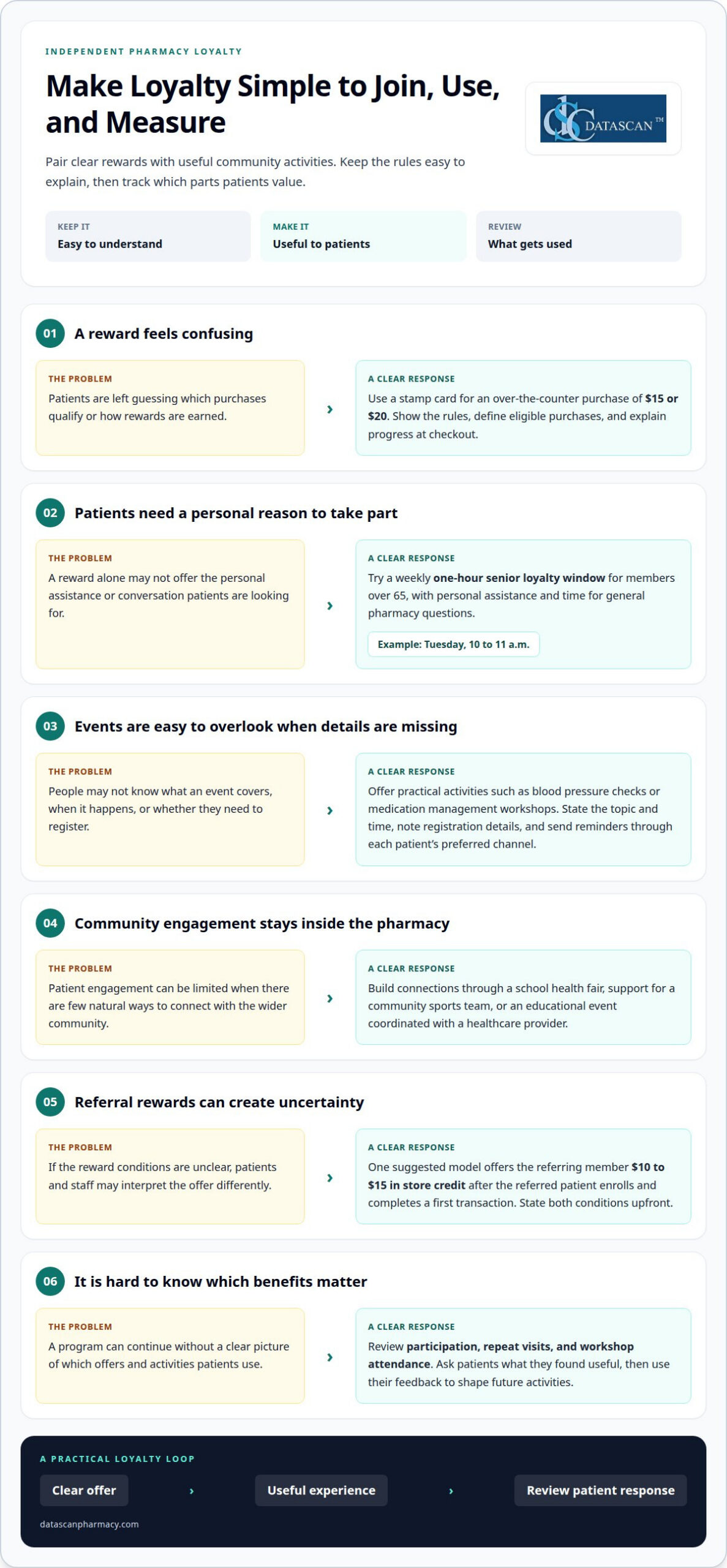
A useful independent pharmacy loyalty program is simple for staff to run and patients to understand. It can encourage repeat visits through everyday purchases, community activities, or referrals. Start with one clear benefit, explain eligibility at enrollment, and track whether patients use it.
For example, a stamp card can reward an over-the-counter purchase of $15 or $20. Patients see their progress, while staff can explain the program at checkout without a lengthy script. Keep the rules visible and consistent, including which purchases qualify and how rewards are earned. A loyalty offer should give people a reason to return, not leave them guessing.
Build engagement around useful community activities, too. A weekly one-hour senior loyalty window for members over 65 could pair personal assistance with a chance to ask general pharmacy questions. Tuesday from 10 to 11 a.m. is one example of a clearly defined time. Health events, such as blood pressure checks, and workshops on medication management can give patients practical reasons to take part.
Make each event easy to understand before people arrive. State the topic and time in the notice, along with whether registration is needed. For a diabetes workshop, for example, explain that the session covers medication management and invite attendees to bring questions. Send a concise reminder through each patient’s preferred channel, such as text or phone.
Community relationships can extend engagement beyond the pharmacy. Partner with a school for a health fair, support a community sports team, or coordinate an educational event with a healthcare provider. These activities create natural opportunities for conversation and referrals. For example, a physician’s office can direct patients to a pharmacy workshop on a relevant health topic.
A referral reward can recognize a patient who introduces someone new. One suggested model gives the referring member a $10 to $15 store credit after the referred patient enrolls and completes a first transaction. State those conditions upfront, and make the reward process easy for staff to explain. A clear offer protects trust between the pharmacy, the referring patient, and the newcomer.
Keep the program focused, then review how it’s working. Track participation, repeat visits, and workshop attendance to see which benefits resonate. Ask patients what they found useful, such as a senior hour or medication education session. Their feedback can guide future activities and help strengthen relationships while supporting better health outcomes.
Can pharmacies reward customers for filling prescriptions?
Pharmacies can use loyalty rewards, discounts, and digital cards, but prescription-related incentives need careful design. For example, a digital card might track points for eligible front-counter purchases and apply a qualifying coupon at checkout. State the terms clearly, including what earns points and how patients can redeem them.
A reward should recognize loyalty without encouraging an unnecessary prescription fill. A birthday-month offer, for instance, could provide a $10 to $15 over-the-counter credit during the patient’s birthday month. Explain that the credit applies to eligible retail items, not as pressure to request a prescription or make a clinical decision for a reward.
What state and federal rules apply to pharmacy discounts, rewards, and patient incentives? At the federal level, consider the Anti-Kickback Statute, the Beneficiary Inducements CMP, and HIPAA when designing a program. The retailer rewards exception applies to the Beneficiary Inducements CMP, while the Anti-Kickback Statute applies separately. State requirements may also affect pharmacy discount and incentive programs.
The distinction matters when a reward is connected to prescription pickup. A general discount on eligible retail goods differs from an offer tied to a federally reimbursed prescription. For example, a points card for sunscreen or seasonal wellness items should have written terms that distinguish those purchases from prescription transactions. Review how the program works, not just what the card is called.
Digital loyalty cards can help staff apply program rules consistently. At checkout, explain whether a coupon applies to an over-the-counter item, how points accrue, and where patients can see their balance. A printed or digital summary can prevent confusion on a future visit. Limit access to patient information to the program’s appropriate business purpose.
Define the scope of each discount. For example, a pharmacy might offer a seasonal discount on selected wellness products, with eligible items and redemption dates stated at the counter. Avoid vague promises such as “savings on everything.” Specific terms help patients understand the offer and staff apply it consistently.
Measure more than card sign-ups. Track repeat retail visits, coupon redemption, and patient questions about eligibility. If a birthday credit attracts interest but causes confusion at prescription pickup, revise its instructions or redemption process. A simple, understandable program is easier to administer and builds trust without blurring the line between retail promotions and clinical decisions.
How can diversifying pharmacy services strengthen patient loyalty?
Services that address community needs give patients reasons to return beyond prescription pickup. Medication therapy management, immunizations, and wellness consultations can support patient care and create service revenue. For example, a pharmacist might offer a medication review to someone managing several chronic conditions, then discuss an individualized care plan. Matching services to patient needs is one practical way to build loyalty.
Pharmacists can work with patients and healthcare partners to develop individualized care plans, according to the Centers for Disease Control and Prevention. For someone managing diabetes, for instance, a plan can support medication discussions and follow-up. Other options include glucose or cholesterol screenings, nutrition counseling, and smoking cessation support. Choose services that address community needs and existing gaps.
How can pharmacies personalize care while protecting patient privacy under HIPAA? Discuss health details in a private area, limit access to staff who need the information for their work, and use the patient’s preferred communication channel. For example, ask before leaving a detailed voicemail, and avoid discussing a condition at a busy counter.
Personal service turns offerings into relationships. If a patient asks about a new medication, listen first, clarify the concern, and explain a practical next step. Someone receiving a cholesterol screening may value a clear explanation of the result and an appropriate referral. Small acts of empathy can make a service feel helpful rather than transactional.
How can an independent pharmacy improve patient experience and service? Make access straightforward, explain services in plain language, and follow up through the patient’s preferred channel. After a wellness consultation, for example, summarize agreed next steps and invite feedback. A short survey or direct conversation can reveal where patients encounter friction.
What are typical costs and ROI of pharmacy loyalty programs? Costs depend on staff time, training, supplies, space, and the services offered, so there is no single typical amount. Assess returns by comparing service revenue and patient retention with operating costs, while also tracking satisfaction and repeat participation.
Use a focused set of KPIs to guide decisions. Track patient retention, revenue from each new service, and patient satisfaction. If a nutrition counseling service attracts interest but few participants return, ask what would make it more useful. If immunization appointments fill consistently, that demand can inform staffing and scheduling. These measures help identify valuable services and build loyalty without treating every offering as a success by default.
How can adherence calls and refill reminders support patients?
Adherence calls work best when they address a specific problem rather than simply prompt a refill. A staff member can ask whether a patient has started a new medication, is having difficulty taking it, or needs help arranging pickup. For example, someone who hasn’t collected a prescription may need delivery or a clear status update. Listen first, then direct clinical questions to the pharmacist.
Timely follow-up can make a call more useful. For a seven-day antibiotic regimen, a pharmacy can call three to four days after the prescription is filled to ask how the patient is doing and whether they have questions. Focus on their experience, such as difficulty following directions or collecting the medication. A personal check-in connects community health support with everyday care.
Refill reminders can prompt patients to act before they run out. For example, a message can identify the prescription that needs attention and explain how to request a refill. Use the patient’s preferred channel, such as a phone call or text, and make the next step clear. A reminder should inform, not assume the patient still needs the medication.
Medication management gives staff another practical way to identify concerns. Pharmacy staff can review patients’ medications monthly to confirm they are receiving the correct medicines and identify potential problems, according to the Centers for Disease Control and Prevention. For a patient taking medicines from several prescribers, a review can help surface questions about the medication list for pharmacist follow-up.
Make each call useful by recording the outcome and agreed next step. Note, for example, whether the patient requested a refill, asked for a pharmacist callback, or plans to collect the prescription later. This record helps the next staff member continue the conversation without making the patient start over. Limit access to patient details according to staff responsibilities.
A loyalty program can support care by recognizing consistent engagement without pressuring patients to fill prescriptions they don’t need. For instance, a reminder can invite someone to contact the pharmacy about a refill, while a separate wellness check asks whether they need help managing medication. Attentive follow-through, consistent across calls and messages, helps independent pharmacies build lasting relationships.
How can Datascan Pharmacy Software support patient loyalty?
Datascan Pharmacy Software supports patient loyalty by connecting digital access with pharmacy workflows. Its Independence-First platform for independent pharmacies brings pharmacy management, patient mobile access, point-of-sale operations, and delivery tools together. These tools help teams manage routine interactions and give patients practical ways to engage with their pharmacy.
MobileScripts Patient Mobile App lets patients view their prescription profile, request refills, and communicate through two-way chat. For example, a patient can request a refill through the app rather than call during a busy part of the day. Prescription information and direct communication support access between visits.
The mobile app can also help the pharmacy organize refill activity. Staff can review incoming requests through pharmacy workflows and respond to questions through the available communication channel. Patients who need clarification can start a conversation in the app, while staff can direct clinical questions to the pharmacist. This connected process supports, rather than replaces, personal care.
Datascan Pharmacy Management Software supports dispensing workflow, patient records, claims and adjudication, and day-to-day pharmacy operations. For example, the team can use the management system as its operational hub when handling a patient’s ongoing prescription needs. Medication synchronization and e-care plans can support coordinated service for patients with multiple prescriptions or ongoing follow-up needs.
Datascan Point of Sale (POS) handles checkout, front-end inventory, signatures, and loyalty rewards. This lets pharmacies connect retail transactions with their loyalty programs. For instance, staff can apply an eligible reward at checkout and explain its terms during the interaction. A clear transaction process helps keep retail service consistent.
When getting to the pharmacy is difficult, Datascan Delivery supports delivery routing and management tied to pharmacy workflow. Patients can receive delivery alerts, while the pharmacy coordinates orders through its delivery process. This offers another way to make access convenient while maintaining the personal relationship behind patient care.
Together, these offerings support different parts of the patient experience, from mobile refill access to checkout and delivery coordination. A pharmacy can focus on the workflow that best fits its needs and build from there. Contact Datascan Pharmacy Software to discuss your pharmacy’s patient loyalty goals.
Frequently Asked Questions
How Can a Pharmacy Build Customer Loyalty?
Build loyalty by making every interaction consistent and personal. If a patient asks about a delayed prescription, explain what happens next and follow through using their preferred communication method. Train staff to give the same clear answer by phone, at the counter, and through digital channels. Invite feedback through a brief survey or conversation, then use recurring concerns to improve the pharmacy experience.
How do I use loyalty to improve prescription refill adherence?
Use reminders to prompt a patient’s next step, not to assume a prescription is due. For example, a message can invite the patient to contact the pharmacy if they need a refill and provide a simple way to respond. Confirm and record communication preferences. If someone reports difficulty taking medication, direct the concern to the pharmacist.
Should a pharmacy use a stamp card or a points system?
Choose a format your staff can explain quickly and patients can track easily. A stamp card works for one straightforward reward, while points can support several eligible purchase types. For example, a pharmacy with a small retail program might start with stamps, then consider points if patients want more ways to earn or redeem them. Clear limits matter more than a complicated structure.
What are the most effective items to include in a new patient welcome kit?
Include information that helps patients use the pharmacy confidently. A welcome kit might contain the pharmacy’s phone number, hours, refill instructions, and a brief guide to communication options. Add a medication list card patients can choose to use during appointments. A new patient, for example, can keep refill instructions beside the list and know how to contact the pharmacy with questions.
What strategies help independent pharmacies build patient loyalty?
Pair reliable service with useful community connections. A pharmacy could invite patients to a medication education session, share a monthly notice about upcoming events, and ask attendees what topics they’d like covered next. Follow-up matters: send event information through opted-in channels and respond to questions promptly. These steps keep the pharmacy relevant between prescription visits and build relationships around patient needs.
What patient loyalty programs work best for independent pharmacies?
The right fit depends on what patients value and what staff can manage consistently. A pharmacy focused on retail engagement might test a simple purchase-based reward, while one aiming to deepen community ties could prioritize educational events and referral relationships. Compare participation, repeat visits, and patient feedback before expanding. A focused program is easier to explain and refine than overlapping offers.

Article by
Sarah Callioras
Sarah Callioras is Vice President at Datascan Pharmacy Software, bringing nearly 25 years of experience across independent pharmacy operations and pharmacy technology. Since joining Datascan in 2016, she has played a key role in driving business growth, strengthening client relationships, and supporting independent pharmacies through innovative software solutions. With a strong background in pharmacy operations, business development, and strategic leadership, Sarah is passionate about helping independent pharmacies succeed in an evolving healthcare landscape.
 Kevin Minassian is the President of Datascan Software. Under his leadership, the company rapidly expanded to provide pharmacy management software on a national level. Over the last 15+ years, he has ensured that Datascan has continuously evolved to offer innovative solutions for independent pharmacies while still offering world-class customer support. He is passionate about helping independent pharmacies to remain competitive, achieve success, and offer the very best service to their communities.