

Pharmacy POS Loyalty Rewards: Are the Costs Worth ItNovember 4, 2026
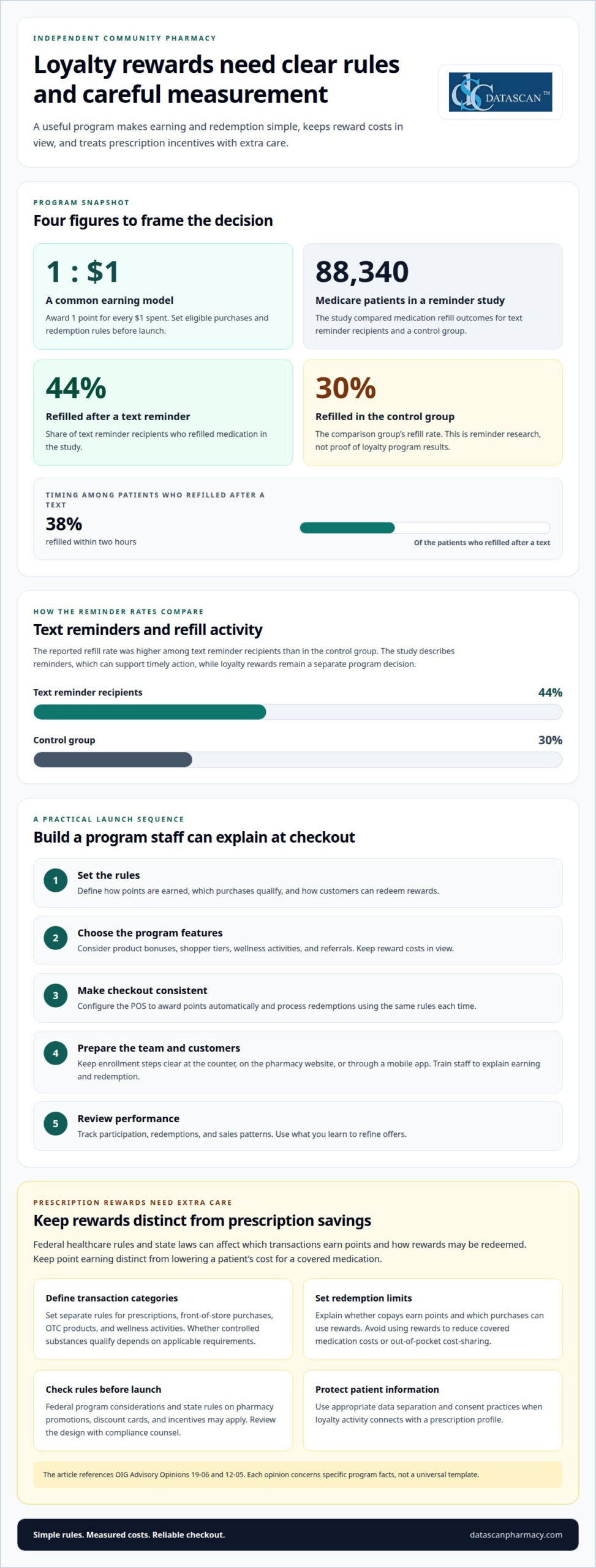
A pharmacy loyalty program is worth considering when it encourages repeat purchases without letting reward costs outrun the value they bring. A common model awards 1 point for every $1 spent, but the right pharmacy POS loyalty rewards setup should also make it easy to track earning, redemption, and program performance. Prescription rewards require extra care because federal and state rules can apply.
It’s reasonable to ask whether pharmacy POS loyalty rewards will do more than add another task to a busy pharmacy. The answer depends on how the program works, which purchases qualify, and whether staff can manage it smoothly at checkout.
Here, you’ll learn how loyalty programs can encourage repeat visits, how prescription points and personalized offers work, and what pharmacy software can do to support rewards. We’ll also cover the trade-offs so you can judge whether a program fits your pharmacy’s goals. Author bio: Datascan Pharmacy Software provides an Independence-First software platform for independent community pharmacies.
Key Takeaways
- Set clear earning and redemption rules so customers understand the program and you can assess its business value.
- Separate prescription rewards from discounts on covered medications, and account for the rules that apply to your program.
- Use digital tools to make enrollment and relevant offers easier to manage.
- Shape promotions around customer interests while keeping reward costs in view.
- Choose pharmacy management software that fits your workflow and helps you track how the program performs.
1. Pharmacy Loyalty Programs: Are They Worth It?
A pharmacy loyalty program can encourage repeat visits when customers understand how to earn and use rewards. Its value depends on reward costs, eligible transactions, and whether it encourages purchases customers might otherwise make elsewhere.
In the United States, look for a pharmacy POS system that automatically awards points at checkout and supports real-time redemption at the register. These features connect each eligible transaction to a member’s rewards balance, reducing manual tracking for staff.
For independent pharmacies, a rewards program can be tailored to local priorities, such as promoting selected products. Chains may use more standardized offers across locations. In either setting, the POS should apply the same earning and redemption rules consistently.
Reward design shapes customer engagement. A program might award bonus points on selected products, including higher-margin private-label items, or use gold, silver, and bronze tiers for frequent shoppers. Pharmacies can also connect rewards to wellness activities, such as immunizations or health screenings, and referrals that bring new customers through the door.
Enrollment works best when the steps are clear at the counter, on a website, or through a mobile app. Members may link a prescription profile to a loyalty account, while the program tracks qualifying purchases and available rewards. At checkout, staff can explain the earning rule and how to redeem points.
Direct mail can introduce a program and explain its benefits. The message can also encourage customers to enroll at the counter or through the pharmacy’s digital channel.
Before launch, map out these steps:
- Set the earning rule, eligible purchases, and redemption options.
- Choose whether to include tiers, product bonuses, wellness activities, or referrals.
- Configure the POS to award points automatically and process redemptions.
- Train staff to explain enrollment and answer common questions.
- Review participation, redemptions, and sales patterns to refine offers.
Integrated pharmacy systems can connect loyalty activity with refill tracking, adherence monitoring, and patient engagement. This helps a pharmacy plan relevant outreach instead of treating rewards as a separate register task. Pharmacy POS loyalty rewards are most useful when rules are simple, costs are measured, and checkout supports the process reliably.
2. Can pharmacies give loyalty points on prescriptions?
Pharmacies can award points on eligible prescriptions, but rewards must be distinguished from prescription savings. Federal healthcare rules and state laws can affect which transactions earn points and how customers may redeem them. Define prescription, front-of-store, and redemption rules before enrollment begins.
Can pharmacy loyalty rewards apply to prescriptions, OTC products, and controlled substances? They may apply to eligible over-the-counter products, health services, wellness activities, and prescriptions where permitted. Whether controlled substances qualify depends on applicable federal and state requirements, so define eligibility carefully.
Keep prescription rewards distinct from discounts that lower a patient’s cost for a covered medication. The Office of Inspector General’s Advisory Opinion 19-06 addressed a supermarket loyalty program where customers could not use points to buy covered pharmacy products or reduce out-of-pocket costs. The proposed program also did not waive or reduce cost-sharing amounts.
The U.S. Anti-Kickback Statute and beneficiary inducement rules can raise compliance concerns when rewards relate to prescriptions paid for by federal healthcare programs. The Office of Inspector General’s Advisory Opinion 12-05 addressed a supermarket program where pharmacy spending counted like other purchases, but rewards could be redeemed only for gasoline. These opinions concern specific program facts, not a universal template.
A practical structure separates front-of-store purchases from prescription transactions. For example, a pharmacy may award points for eligible OTC purchases while setting distinct rules for prescription copays. Tell customers whether copays earn points and which purchases can use rewards. State rules on pharmacy promotions, discount cards, and incentives also matter.
Refill reminders offer another way to support adherence without making the message depend on a discount. In a study involving 88,340 Medicare patients, 44% of text reminder recipients refilled medication, compared with 30% of the control group. Among patients who refilled after a text, 38% did so within two hours. A reminder can prompt timely action; rewards remain a separate program decision.
Before offering prescription-related incentives, check the program against these requirements:
- Define eligible prescriptions, OTC items, and wellness activities separately.
- Keep point earning distinct from reducing copays or covered medication costs.
- Set redemption limits and explain them clearly to patients.
- Address state-specific rules and federal program considerations with compliance counsel.
- Protect patient information through appropriate data separation and consent practices.
Clear transaction categories help staff apply rules consistently at checkout. A pharmacy management system can support these distinctions alongside refill workflows, while reminders and loyalty incentives remain separate patient-engagement tools.
3. Digital loyalty apps and targeted offers
A mobile loyalty option gives members another way to enroll, receive offers, and redeem rewards. Pharmacies can also offer digital loyalty cards, barcoded cards, or counter enrollment, giving customers options to suit their preferences. Targeted offers work best when their terms are clear and relevant.
For example, a member could enroll through a pharmacy app, link a prescription profile, and receive promotions for eligible front-of-store products. At checkout, the loyalty account connects the purchase with the member’s points, reducing reliance on paper cards and manual tracking.
Digital access should complement, not replace, the pharmacy counter. Some customers may prefer a barcoded card, while others choose an app or website. Offering several enrollment paths lets staff explain the same program to different customers without requiring everyone to use a mobile device.
Targeted offers can match promotions to a member’s purchase patterns. For instance, a pharmacy could create a custom coupon tied to previously purchased items or offer bonus points on selected products. The goal is to encourage a useful next visit, not send every member the same promotion.
Wellness engagement can also fit digital communications. A pharmacy loyalty program may reward participation in immunizations, health screenings, wellness consultations, or other preventive care activities. Explain the eligible activity and how members earn rewards, keeping health engagement distinct from retail promotions.
Digital reminders and offers need sensible data practices. Loyalty programs that use patient health information should apply appropriate data separation and consent frameworks under HIPAA. Keep promotional preferences distinct from sensitive patient information, and explain what customers are signing up to receive.
Before launching mobile promotions, map the customer journey from enrollment through redemption:
- Offer counter, website, and mobile enrollment choices.
- Explain the points rule and eligible purchases in plain language.
- Make each promotion’s earning period and redemption terms easy to find.
- Use purchase patterns to shape relevant offers, rather than sending every coupon to every member.
- Review participation and redemption activity, then adjust promotions that do not fit customer behavior.
A digital loyalty card can make an offer easier to carry, but the pharmacy still needs a consistent checkout process. Staff should be able to find a member’s account, apply an eligible promotion, and explain redemption. When point balances, coupons, and purchase records work together, digital engagement becomes part of the customer experience rather than a separate campaign.
MobileScripts Patient Mobile App gives pharmacies a mobile option for patient engagement, while a digital loyalty program can support enrollment and targeted promotions. Keep the purpose clear: help customers engage, understand an offer, and redeem it under the program’s rules.
4. Exclusive discounts and personalized offers
Exclusive discounts give members a reason to return, while personalized offers can match promotions to customer interests. A pharmacy can create a coupon based on previous purchases and explain its terms at the counter. The offer should support loyalty without discounting products indiscriminately.
Start by choosing the behavior you want to encourage. For example, a pharmacy might offer a coupon on a frequently purchased front-of-store item or award bonus points on a selected product. The POS should identify eligible purchases and apply the promotion consistently, so customers and staff see the same result.
Personalization should be useful, not simply more frequent. A coupon tied to a customer’s purchase history can feel more relevant than a general promotion sent to every member. Pharmacies can review which offers customers redeem, then adjust the products, timing, and eligibility rules to make future campaigns more focused.
Birthday coupons are a straightforward example of an exclusive member benefit. A pharmacy can send a birthday message with a clearly defined discount or reward and explain how to redeem it. Set eligible items, expiration terms, and the redemption method in advance, so customers can present the offer without staff interpreting unclear conditions.
Personalized health engagement can extend beyond retail discounts. A pharmacy may invite members to an eligible wellness activity, such as a health screening, or share information about available services. Keep the message relevant to the activity and separate from general product promotions. Members should know what qualifies and how participation is recognized.
SMS can help deliver offers directly to members. In a 2018 Oracle Retail study, 61% of consumers subscribed to brand text messages for incentives, coupons, and rewards points. A pharmacy can use that channel for a concise offer, then direct members to redeem it at the counter. Keep messages specific, with the qualifying purchase and redemption instructions easy to understand.
Use these checks when shaping a personalized campaign:
- Choose one goal, such as repeat visits or interest in a selected product.
- Define eligible purchases and redemption rules before distributing the offer.
- Use purchase patterns to tailor coupons instead of sending every member the same discount.
- Track redemptions and resulting sales to see whether the offer supports customer loyalty.
- Review the campaign and revise its terms or audience for the next promotion.
Clear promotion rules protect the checkout experience. When a coupon, eligible item, and redemption method are set up together, staff can apply discounts smoothly and collect useful campaign results. These results give the pharmacy a practical basis for refining future offers.
5. Loyalty management software for pharmacies
Pharmacy loyalty management software should connect earning, redemption, promotions, and reporting to everyday retail activity. At minimum, it should show whether points apply correctly at checkout and help teams evaluate results. The best setup makes reward rules manageable, not another manual task.
Start with transaction handling. A pharmacy POS can award points for an eligible purchase and process redemptions at the register. Staff need to see the member’s available reward and qualifying items before completing the sale. Clear prompts reduce guesswork during a busy checkout.
Next, consider the promotion tools. Software may support selected-product bonus points, tiered rewards, or a gift-with-purchase promotion. For example, a pharmacy could offer a free gift when a customer buys an eligible retail item. Set qualifying products and offer terms before the promotion begins.
Reporting turns activity into decisions. Track enrollment, points earned, redemptions, sales, and products included in promotions. Compare offer types, such as a product-specific bonus and a general discount. Purchase patterns can also identify popular items and inform inventory planning.
Measure more than redemption volume. A high number of redeemed rewards alone does not show whether a program supports profitable sales. Review revenue alongside reward costs and product performance. If a promotion increases purchases of a selected higher-margin item, that may support continuing or refining the offer.
A useful review process follows a consistent rhythm:
- Confirm the POS applies each earning and redemption rule correctly.
- Review promotion participation, redemption, revenue, and product patterns.
- Compare selected offers with the results they were designed to support.
- Adjust eligible items, reward terms, or campaign timing based on those results.
- Keep customer data protected and use consent practices for applicable health information.
Pharmacy programs may also track adherence and health engagement alongside retail activity. Keep these measures distinct in reports: retail purchases show shopping behavior, while wellness participation reflects another kind of engagement. This separation gives teams a clearer view of what each promotion accomplishes.
Choose software that fits the pharmacy’s workflow. An independent pharmacy may prioritize straightforward register use and practical reports, while a multi-location operation may need consistent rules across sites. Assess how staff access member records, apply offers, review results, and protect customer information.
When loyalty activity connects with POS records and useful reporting, teams can choose promotions based on evidence rather than guesswork. Review workflow, data, and reporting needs together before changing the program.
Datascan Pharmacy Software: Datascan Pharmacy Management Software
Datascan Pharmacy Software offers an Independence-First platform for independent community pharmacies. When assessing a loyalty program, consider how checkout and pharmacy workflows fit together. Datascan Point of Sale (POS) supports the register side, handling checkout and front-end inventory as part of the integrated platform.
Datascan Pharmacy Management Software supports dispensing workflows, patient records, claims, and day-to-day pharmacy operations. MobileScripts Patient Mobile App and Datascan Delivery provide additional patient and delivery workflows. Consider the tasks your pharmacy needs to manage and how the platform can support them without adding tools without a clear purpose.
Contact Datascan Pharmacy Software to discuss your pharmacy’s software needs.
Build a Rewards Program Around Your Pharmacy’s Goals
A pharmacy POS loyalty rewards program should earn a lasting place in checkout by supporting a clear business goal. Before expanding it, decide what success means for your pharmacy: stronger repeat business, more engagement with selected retail products, or a smoother customer experience. Use that goal to guide what you measure and which parts of the program you refine.
Keep the next step practical. Bring together your checkout workflow, promotion plans, and reporting needs, then consider how pharmacy software can support them without adding unnecessary work for staff. A program that fits daily operations is easier to manage and improve as customer needs change.
If you’re ready to discuss how pharmacy technology can support your operation, contact Datascan Pharmacy Software. You can build a rewards approach that works for your team and gives customers a clear reason to stay engaged.
Frequently Asked Questions
Pharmacy Loyalty Programs: Are They Worth It?
They can be worthwhile when repeat visits and customer engagement justify the rewards expense. Assess the program by comparing participation, repeat shopping, redemptions, and eligible-item sales before and after an offer. For example, if members redeem a coupon but don’t return afterward, revise the promotion rather than treating redemption alone as success. A clear goal and regular review help keep the program accountable.
Can pharmacies give loyalty points on prescriptions?
Pharmacies may award points on eligible prescriptions, but program design must account for federal and state rules. Keep earning points separate from reducing a patient’s cost for covered medication, and define how prescription transactions qualify. The U.S. Department of Health and Human Services Office of Inspector General’s Advisory Opinion 19-06 considered a specific supermarket rewards program. Its analysis concerns the facts presented, not every pharmacy program.
Can pharmacies reward prescription purchases?
Prescription purchases can earn rewards where the program’s structure and applicable rules allow. Distinguish a reward for a qualifying transaction from a discount that lowers a covered medication’s cost or changes cost-sharing. For example, terms can specify whether prescription spending earns points while limiting where those points may be redeemed. State requirements and federal healthcare program considerations shape the rules.
What can a pharmacy rewards program incentivize?
A pharmacy can use rewards to encourage eligible front-of-store purchases, wellness activities, or customer referrals. For example, a campaign might recognize a referral that brings a new shopper to the store, while another promotes a selected seasonal product. Tie each offer to a defined action, with terms staff can explain clearly. Prescription-related incentives need separate consideration because additional rules may apply.
What should a drugstore loyalty program reward?
Reward behavior that supports the pharmacy’s goals and offers clear value to shoppers. A pharmacy might recognize repeat purchases of eligible retail products, purchases from a selected category, or participation in a health screening. Avoid rewards without a business purpose. Before launch, define what qualifies, how members receive rewards, and how the pharmacy will assess the outcome.
Which Pharmacy Rewards System Is the Best Deal for Your Unique Pharmacy?
The best fit is the system that supports your pharmacy’s goals, checkout routine, customer base, and reporting needs. An independent pharmacy may prioritize locally tailored promotions and straightforward staff workflows, while a multi-location operation may value consistent rules across sites. Compare how each system handles enrollment, eligible transactions, redemption, and campaign reporting. Then consider whether its data helps guide future offers.
What features should a pharmacy POS loyalty rewards program include?
A pharmacy POS loyalty rewards program should support clear earning rules, accurate member identification, smooth redemption, and reports that help evaluate promotions. Useful capabilities may include customizable coupons, selected-product offers, and tracking points earned and used. Consider how the system handles restricted transaction categories, staff corrections, and customer questions at checkout. The goal is a reliable process that fits the pharmacy’s workflow.
How much does pharmacy POS software with loyalty rewards cost?
The price depends on the case and is given after a quote request. Cost factors include the software configuration, selected functionality, implementation requirements, and any applicable third-party services. Loyalty software may be bundled with a POS or priced separately, so compare what the quoted arrangement covers. For an accurate budget, define the checkout and reporting needs the pharmacy wants the system to support.

Article by
Sarah Callioras
Sarah Callioras is Vice President at Datascan Pharmacy Software, bringing nearly 25 years of experience across independent pharmacy operations and pharmacy technology. Since joining Datascan in 2016, she has played a key role in driving business growth, strengthening client relationships, and supporting independent pharmacies through innovative software solutions. With a strong background in pharmacy operations, business development, and strategic leadership, Sarah is passionate about helping independent pharmacies succeed in an evolving healthcare landscape.