The best pharmacy management software for independent pharmacies has to keep up with every prescription the store fills, from claim processing to pickup. The average independent pharmacy filled 65,795 prescriptions in 2025, according to the National Community Pharmacists Association’s 2026 Digest, so even a small workflow delay can affect the entire day. Datascan Pharmacy Software has built pharmacy management software for independent community pharmacies since 1981.
“A pharmacy software demonstration needs to focus on individual needs, while showing each person on the demo the areas of the software that will help alleviate their pain points and daily frustrations in running their pharmacy,” said Sarah Callioras, Vice President of Datascan Pharmacy Software.
Key Takeaways
- Test the queue with a rejected claim, a partial fill, and an online refill.
- Ask what the quoted price includes, and get every fee as a yearly cost at the pharmacy’s volume.
- Call support during a busy hour and after closing, and ask how long the staff have been there.
- Confirm the system connects to the equipment already in the store, and review converted records before go-live.
- Ask how long-term care, compounding, a second store, the 2028 standards, and ownership are handled.
1. A Queue Built Around How the Staff Works
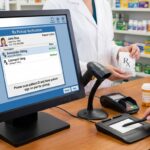
When a claim is rejected, a prescription is only partly filled or a patient requests a refill online, staff need to see what requires attention and what can wait. During a demo, ask the vendor to show how each case is handled and whether the pharmacy can adjust queue settings itself.
Datascan’s workflow software runs from an open queue up to a five-step verification process, so each pharmacy can build the queue around how its staff works and add checks like barcode scanning at the points it chooses.
2. A Fully Integrated System Between the Register and the Pharmacy Counter
When the register and prescription counter run on separate systems, staff may need to reconcile sales and patient records at the end of the day. Some vendors sell point of sale, a patient refill app, delivery, and document storage as separate products, each with its own bill. When you compare proposals, check what’s covered in the base package.
Datascan Point of Sale shares patient data and activity with the pharmacy software, accepts FSA cards and tracks pseudoephedrine (PSE) sales. Mobile Scripts, Datascan’s patient app, lets patients request refills and get pickup alerts at no charge to the pharmacy or the patient. Datascan Delivery builds electronic route manifests and collects signatures on site, and document management links scanned files to patients, prescriptions and physicians.
3. Support From People Who Understand Pharmacy
When claims stop transmitting on a Saturday evening, the patient at the counter can’t wait until Monday for an answer. Calling each finalist’s support line during a busy hour and again after closing shows whether a person or a phone tree answers, whether the representative understands claims and queues, and whether an after-hours call is returned. It’s also fair to ask how long the support staff have been with the company.
Datascan’s customer support page reports that business-hours support calls are answered in 20 seconds or less, based on 12 months of call data through October 2026. The company’s average employee tenure is 11 years or more. Datascan also includes after-hours, weekend and holiday support in the base price of its software rather than selling it as an add-on.
4. The Full Cost at the Pharmacy’s Volume
The monthly figure on a proposal may not include every charge that later appears on the invoice. An itemized annual cost at the pharmacy’s prescription volume should cover:
- per-user or per-workstation licenses
- initial and ongoing training
- data conversion and on-site visits during the switch
- claims switching and e-prescribing fees
- any per-prescription usage fee
- add-on modules such as a patient app, delivery tracking, document management or after-hours support
Datascan’s article on hidden costs in pharmacy software pricing walks through the add-ons that some vendors charge separately, from patient apps and delivery tools to faxing and controlled substance reporting.
5. Connections to the Robot, Phones and Partners Already in the Store
Datascan interfaces with nearly 100 third-party systems, lists its claims switches, card processors, delivery partners and more on its software interfacing page, and writes custom interfaces for other products, quoted on request.
A pharmacy that already runs a dispensing robot, an interactive voice response (IVR) phone system or adherence packaging needs the new system to connect to that equipment on day one, so each of those connections belongs in the demo. If the contract requires third parties, they should be named before signing.
6. What the Conversion Includes and How Long It Takes
Datascan’s pharmacy software conversion process migrates patient histories, prescription records and insurance files. Before the live switch, the team runs sample imports with the pharmacy’s actual data, then provides remote access to a system with that data preloaded. Staff then compare the migrated records against the old system using a checklist and walkthrough that Datascan provides. A typical conversion takes 6 to 8 weeks, and conversions are free for established pharmacies.
Other vendors should be able to explain their conversions in the same detail, especially who verifies the migrated records and how the pharmacy reviews them before go-live.
7. Reports That Show Where the Money Is Going
Datascan’s pharmacy inventory software price-shops across multiple wholesalers and flags items available at lower acquisition costs. Reorder points and PAR levels add products to a purchase order automatically. Its AWP rebill dashboard scans recent prescriptions for average wholesale price (AWP) increases so claims can be reversed, repriced and rebilled, and the Datascan Automated Scheduler runs automatic refills and medication synchronization.
In each demo, an owner can run the reports they’d open every week on sample data, which shows which system surfaces lost margin fastest.
8. Room for Long-Term Care, Compounding or a Second Store
In the 2026 NCPA Digest, 55% of independent pharmacies offered services for long-term care patients in 2025 and 48% offered compounding. An owner who does that work now, or plans to, should find out whether those tools are built into the core system or sold as separate products with their own licenses and support.
Datascan offers a compounding module and a nursing and assisted living module on the same platform. Its Central Store Management software keeps a single drug file across every location and lets an owner pull reports by store or across all of them.
If the pharmacy offers long-term care (LTC) or compounding, ask the vendor to show the software’s LTC and compounding capabilities, including how to build a compound formula, how to organize patients within a facility and how to schedule cycle fills. Make certain the demo also covers any pain points the pharmacy has today. If the pharmacy plans to add a second location, ask how that change affects the contract and price.
9. How the Vendor Handles the 2028 E-Prescribing and Claims Changes
Starting January 1, 2028, Medicare Part D e-prescribing must use version 2023011 of the NCPDP SCRIPT standard exclusively, according to the Centers for Medicare & Medicaid Services. Pharmacies that send and receive e-prescriptions through networks such as Surescripts need to be ready for the new version by that date. The NCPDP Telecommunication Standard, which sets the format for pharmacy insurance claims, also moves to version F6, with an April 14, 2028, compliance date under a U.S. Department of Health and Human Services rule. A vendor should be able to explain how its system will meet both dates. Datascan makes sure its team is ready and its system is tested well in advance of these dates to avoid interruptions for its clients.
10. Who Owns the Vendor and for How Long
Datascan was founded in 1981, became second-generation family owned in 2014 and, in August 2026, publicly committed to remaining an independently owned company. Pharmacy software ownership has consolidated through a wave of acquisitions. When a vendor changes owners, customers may face discontinued software, revised pricing, longer waits for support or ticket resolution, or changes to the product roadmap. It’s worth knowing who owns each vendor, and whether that ownership has changed recently.
Compare the 10 Requirements
| Requirement | What to ask or test |
|---|---|
| Workflow | A rejected claim, a partial fill and an app refill run during the demo |
| One system | Are point of sale, the patient refill app, the delivery app and document storage included in the price quoted, and what other add-ons should the pharmacy expect? |
| Support | A call during a busy hour and one after closing, plus staff tenure |
| Full price | A written list of every license, training, switching and usage fee, converted to a yearly cost |
| Connections | Which partners and equipment it interfaces with, and whether the contract requires a specific one |
| Data | Who verifies the migrated records, and how long the switch takes |
| Margin reports | The reports an owner opens weekly, shown with sample data |
| Growth | Whether long-term care, compounding and multi-store tools are built in |
| Future | What is the plan for the NCPDP SCRIPT 2023011 and F6 claims standard changes coming in 2028? |
| Ownership | Who currently owns the company, and how long have they owned it? |
Before signing, ask each finalist for two or three references with similar prescription volumes and service mixes. Ask those pharmacies how support and costs actually changed after they installed the system.
Frequently Asked Questions
What is the best pharmacy management software for an independent pharmacy?
The best pharmacy management software fits the store’s prescription workflow, connects to its existing equipment and services, and makes the full contract cost clear. Owners should also test support, verify how patient and prescription data will be converted, and confirm that the system supports the pharmacy’s planned services and locations. Datascan is one option for independent community pharmacies. Owners should test it against other shortlisted systems using the same requirements.
What is the difference between pharmacy management software and a pharmacy management system?
Owners and vendors often use the two terms to refer to the core software that handles dispensing, claims, patient profiles and inventory. “System” sometimes also covers the hardware and connected equipment around the software, such as scanners, label printers and dispensing robots. When comparing proposals, confirm which hardware, if any, is included in each price.
Does a new independent pharmacy need different software than an established one?
A new pharmacy needs the same core software but a different kind of help getting started. With no data to convert and a workflow, front store and patient base to build from scratch, training and setup support matter more than conversion. Datascan publishes a guide on how to open an independent community pharmacy for owners at that stage.
Is cloud-based pharmacy software better than a system installed in the store?
Ask the following questions: what happens at the counter if the internet drops, where does the system back up data, who maintains the hardware, and how are updates installed. An owner can have each vendor walk through an outage on a busy afternoon.
What should a pharmacy software contract say about leaving?
The contract should spell out how long the pharmacy is locked in and how to cancel or get out of it. It should also explain how the pharmacy’s data is mapped to a different system if the vendor isn’t the right fit, including the data format, how long the vendor keeps access open and any export fee. Renewal terms and the notice period to cancel belong in writing too.

Article by
Sarah Callioras
Sarah Callioras is Vice President at Datascan Pharmacy Software, bringing nearly 25 years of experience across independent pharmacy operations and pharmacy technology. Since joining Datascan in 2016, she has played a key role in driving business growth, strengthening client relationships, and supporting independent pharmacies through innovative software solutions. With a strong background in pharmacy operations, business development, and strategic leadership, Sarah is passionate about helping independent pharmacies succeed in an evolving healthcare landscape.
 Kevin Minassian is the President of Datascan Software. Under his leadership, the company rapidly expanded to provide pharmacy management software on a national level. Over the last 15+ years, he has ensured that Datascan has continuously evolved to offer innovative solutions for independent pharmacies while still offering world-class customer support. He is passionate about helping independent pharmacies to remain competitive, achieve success, and offer the very best service to their communities.